


Today we’re used to thinking of companies like Whatsapp, Instagram and Uber as “unicorns” that have disrupted the fundamental ways in which we interact with the world. What they all have in common, apart from this, is the fact they all launched soon after the economic recession of 2008, considered the most severe global recession since The Great Depression of 1929.
Crisis however has always spurred innovation, as the flip side of crisis is an opportunity for innovation. Beginning with frugal innovations as immediate responses, to disruptive innovations filling wide opportunity gaps, historically, periods of crisis have always been followed by periods of great innovation.
As we navigate the ongoing COVID-19 crisis, we have much to learn from past experiences of responding to difficult times. 2020 is now being called “the year of survival”, for individuals, enterprises and investors. As entrepreneurs navigate the simultaneous challenge of running day to day operations while pivoting and adapting broader business models, fundraising is now, more than ever, the key to post-crisis survival.
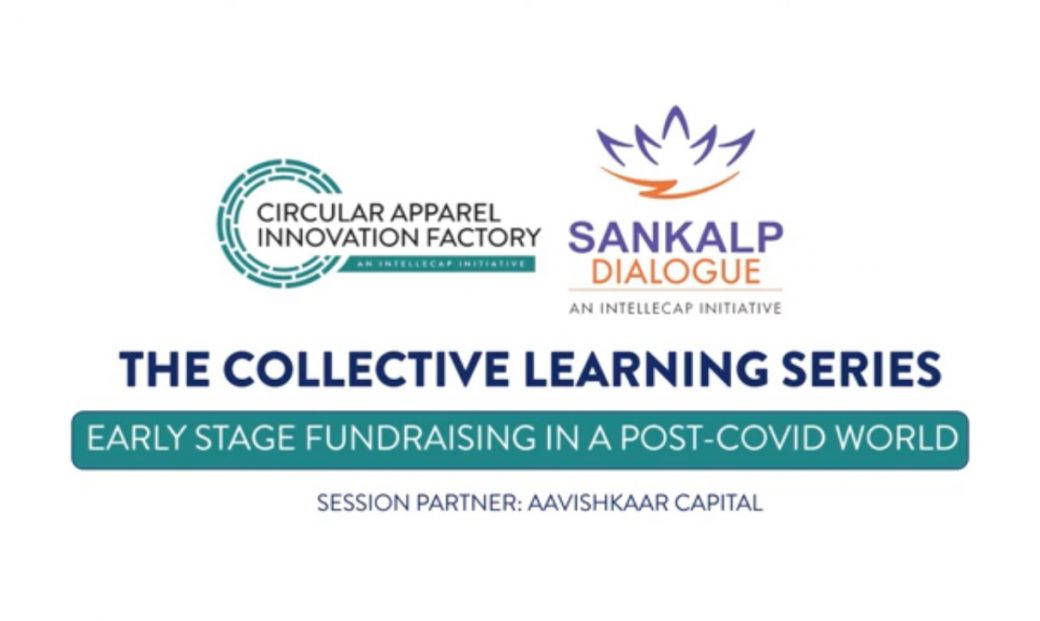
Circular Apparel Innovation Factory (CAIF), in partnership with Sankalp Dialogues, has launched the CAIF Collective Learning Series to help entrepreneurs navigate issues such as “Early-stage fundraising in a post-COVID world”, the session was designed to help young entrepreneurs understand the impact of the COVID crisis on the fundraising landscape and how to adapt their approach to fundraising in a world that has changed suddenly and significantly.
Moderated by Divya Gupta, Investment Manager at Aavishkaar Capital with a panel of experts in early-stage investing — Sushant Bhatia, Regional Investment Manager at Caspian Debt; Shashwat Rai, Senior Investment Manager at Aavishkaar Capital; Utkarsh Sinha, MD at Bexley Advisors; and Samik Rakshit, at Pi Ventures.
What should be the immediate response of the entrepreneur, while survival takes priority?
It is crucial to direct more mental bandwidth to the points listed above and not make mistakes. As entrepreneurs will need to make quick and bold decisions on contrary investments might become scarce.
Are you planning to fundraise? Here are a few things that investors are looking for:
Investors are looking at a deeper level of engagement with their portfolio companies given the scenario. And there is a significant shift in their mental bandwidth to value protection for existing investors and hence new investments have been facing a lag. But as the investors have already started to look at new investments, you can expect changes in their approach.
How are investors getting ready to invest in a post-COVID era?
What are the positive impacts that this crisis can bring?
If you are an entrepreneur currently or you aspire to be one in the near future, the tips above will help you make a better decision or prepare you for the journey ahead.
Watch the whole session here or on our YouTube channel: