


Think about everything that goes into making clothes. The materials used, the way they are put together, the patterning, the design finishings. Now, think about undoing it all. Do you think it would be an effortless process? It can be, if you turn to design disassembly.
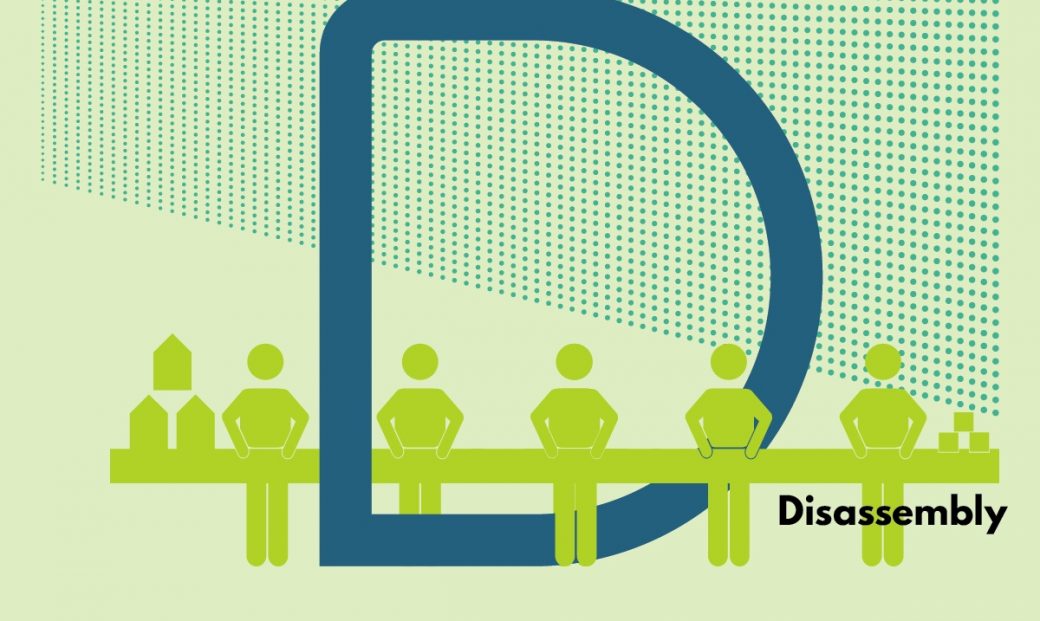
Disassembly is a long, possibly daunting, “D” word, with a rather elementary meaning. Simply put, disassembly is designing and creating products such that they can be easily taken apart, recycled, and reused into new products or raw materials. This can significantly minimize wastage, and help manufacturers get multiple products from one life cycle.
The key to disassembly is thinking about it even before the product exists, at the design stage itself. To optimally disassemble a product, there are certain factors that need to be taken into account at the design stage. Below we break down some basic principles of disassembly:
Clothes are often bound with substances like chemical-based fabric glue and bonding sealers. The lining inside a handbag, or the seams of cuffs and collars could be glued instead of stitched because it’s quicker and cheaper. Such products can be challenging to recycle as they cannot be taken apart with ease and once covered in glue, fabric becomes non-recyclable. Stitching on the other hand is a lot easier to disassemble. Stitching clothes together not only saves time in the dismantling process, but also decreases the toxins found in glues.
Naturally, the durability of the item needs to be taken into account. There are many suitable alternatives to using bonding agents. For instance, look at Wear2 thread. When exposed to microwave energy, this sturdy yarn dissolves, leading to a plain sailing, cost-effective disassembling process.
The bigger the fabric piece, the better it is for recycling. Having fewer seams and cuts enables a sizable recovery of the fabric. As a result, simplicity in the components and parts of the product is key. This also involves finding ways to eliminate or minimize trimmings, zips, hooks, buttons, buckles, rivets and so on. Given the way garments are designed and produced today, these features are purely decorative. So, they are easy to circumvent. As a matter of fact, many big name brands such as H&M, GAP, and Lee Jeans are joining Jeans Redesign, an Ellen Macarthur Foundation initiative for reducing waste from jeans, including the use of rivets.
If one is still intent on using such externalities, degradable products are a second best. Biobutton and Corozo Buttons are a good example of this.
Look at the labeling on your apparel and you’re sure to find that a majority of them are made from blended fabrics. Unfortunately, the technology required for separating materials in a given fabric does not currently exist in India. So, blended materials make it virtually impossible to effectively disassemble a product. On the other hand, using pure, single fibres enable a trouble-free fabric sorting process.
That said, sometimes garments do need a combination of materials to improve their performance — think of gym clothes that need the stretch provided by mixing in lycra or shoes that need poly-blends to make them water resistant. In this case, making the different components of an item from a single textile aids the process!
Following closely on the heels of utilizing mono fabrics is having proper labelling, listing all the materials used. By doing so, materials are easily identifiable and so can be recycled without the risk of utilizing a blended fabric.
Clearly, disassembly of an apparel requires careful thought and construction at the time of design and assembly. Therefore, thinking of disassembly right at the design stage is crucial to redesigning the product into its second life.